
Challenging Political Myths and Collective Blame: Why the Truth About Inherited Hatred Matters

One of the most dangerous consequences of prejudice is how easily an assumption about a particular group can become accepted as an unquestionable truth. Whether these assumptions emerge from political movements, cultural divisions, or family relationships, their consequences can continue for generations when people stop distinguishing verified facts from emotionally driven generalizations.
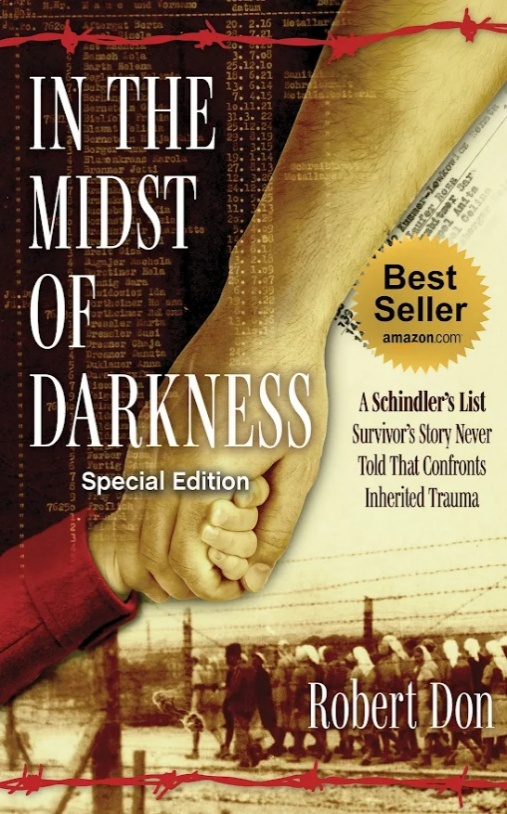
I understand this danger because my childhood was shaped by it. In my memoir, In the Midst of Darkness, I describe how my mother, a Holocaust survivor, instilled hatred toward Germans in my brother and me for more than two decades. Her suffering was genuine, but her belief that German identity automatically implied responsibility for Nazi atrocities was a generalization unsupported by evidence about the individuals she condemned.
Today, I see parallels in political narratives surrounding Israel, Zionism, and the war in Gaza, particularly when criticism of government conduct becomes collective condemnation of Jewish people.
The Political Far Left and the Danger of Collective Accusations
Some voices within the political far left portray Israel primarily through the framework of colonialism, displacement, and Palestinian oppression. These perspectives often emphasize Palestinian historical grievances, including the displacement of hundreds of thousands of Palestinians during the establishment of Israel in 1948.
Those historical experiences deserve recognition, but they do not justify assigning collective responsibility to every Israeli Jew or treating Jewish national identity as evidence of complicity in government actions. Nor should criticism of Israel automatically be dismissed simply because it challenges Zionism or Israeli government policy.
The debate over genocide allegations in Gaza illustrates why careful distinctions are necessary. I question political rhetoric that treats every Israeli Jew as a perpetrator or accomplice, particularly when allegations against the state are used to make sweeping judgments about an entire population.
Israel disputes the genocide allegations and maintains that its military operations were directed against Hamas following the October 7 attacks. International investigators and human rights organizations have nevertheless presented substantial evidence supporting serious allegations against Israel, including genocide. These claims require legal and factual examination, and disagreement over them cannot be resolved by labeling an entire population guilty or innocent.
What the New York City Protests Reveal About Political Polarization
The divisions surrounding New York City Mayor Zohran Mamdani offer another example of how political identities can overshadow shared humanity. Reporting by The Times of Israel described anti-Zionist protesters confronting Mamdani at an October 7 coexistence event, where efforts to recognize Israeli and Palestinian suffering became the focus of political hostility.
Mamdani’s accusations against Israel concerning Gaza have also generated controversy, reflecting profound disagreements over the conflict’s history, humanitarian consequences, and legal interpretation.
For me, the most troubling aspect of these divisions is the tendency to transform political positions into judgments about entire communities. When people are condemned because of their Jewish identity, Israeli nationality, Palestinian identity, or Arab heritage, the distinction between individual responsibility and collective prejudice begins to disappear.
How My Memoir Challenges the Narrative of Inherited Hatred
My mother’s experience demonstrates why victimhood and moral responsibility must be examined separately. She endured Nazi persecution, lost her parents and siblings, and survived concentration camps through the actions of Oskar Schindler. Yet she raised my brother and me to hate our German stepmother, Kathy, because of assumptions about her nationality and the suffering inflicted by Nazi Germany.
We were never given the opportunity to understand Kathy independently of our mother’s resentment. What makes this story particularly tragic is that Schindler, the man who helped save my mother’s life, was himself a member of the Nazi Party, a fact I did not discover until 1993.
That revelation challenged the generalized beliefs that had shaped my childhood. My mother had every right to grieve her family and condemn those responsible for the Holocaust, but she had no right to transfer collective guilt to innocent people or teach her children to hate them.
I wrote my memoir partly to challenge the assumption that a person’s history of victimhood makes their subsequent conduct immune from criticism. My mother’s suffering must be remembered, but the damage caused by her prejudice must also be acknowledged.
Why Truth Must Come Before Political Loyalty
Israel’s 1948 Declaration of Independence promised equality of social and political rights regardless of religion, race, or sex. That founding commitment remains relevant when evaluating Israeli policies, just as Palestinian experiences of displacement and inequality must remain central to understanding the conflict.
Neither historical Jewish persecution nor Palestinian suffering should be used to erase the humanity of the other community. The same principle applies to contemporary accusations: governments and individuals must be judged through evidence, while responsibility must not be assigned according to nationality or religion.
My memoir challenges the idea that inherited beliefs become true simply because they emerge from genuine suffering. I believe the most meaningful response to historical injustice is not to create new generations of resentment, but to question generalized narratives and recognize the difference between documented wrongdoing and collective blame.
Conclusion
In In the Midst of Darkness, I reveal how my mother’s Holocaust experiences became a source of inherited prejudice that affected my brother and me throughout our childhoods and adult lives. The memoir explores our complicated relationships with our parents, the resentment directed toward our German stepmother, and the emotional consequences of growing up with beliefs we were never encouraged to question.
At the heart of the book is the discovery that my mother was saved by Oskar Schindler, a truth that contradicted the generalized hatred she had passed down. By examining this contradiction, I hope to encourage readers to reconsider how prejudice develops, why historical suffering does not justify discrimination, and how understanding the complete truth can help break destructive patterns.
Buy your copy today to discover a Holocaust survivor family’s untold story and its lessons about prejudice, personal responsibility, and intergenerational trauma. Whether you are interested in Holocaust history, Jewish identity, family relationships, or the consequences of cultural hatred, this memoir offers a personal perspective on why truth, empathy, and independent judgment matter across generations.