

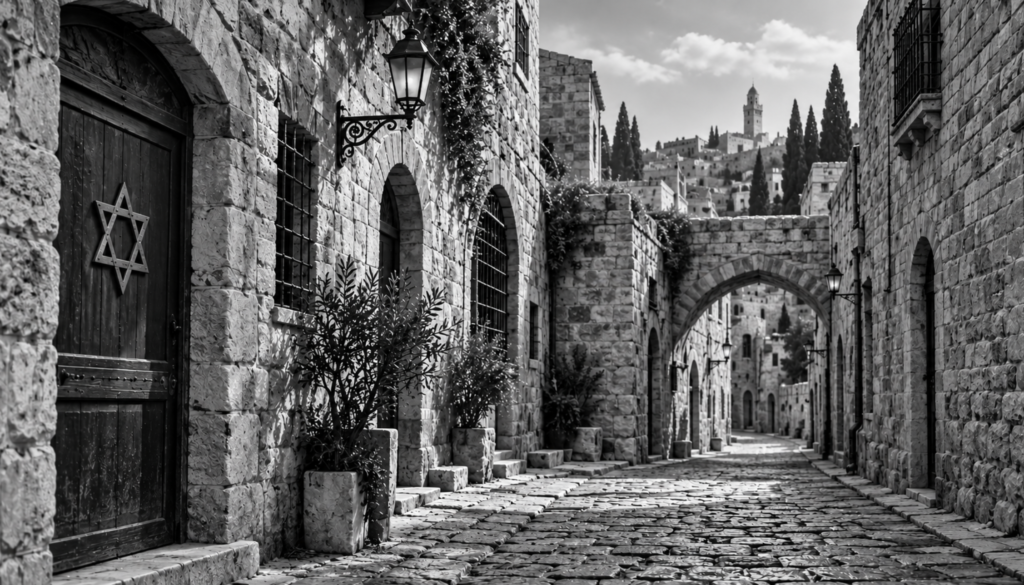
The Holocaust was the most devastating chapter in the history of Jewish persecution, but it was not the first. For centuries before Nazi Germany rose to power, Jewish communities across Europe faced suspicion, discrimination, expulsion, and violence. Understanding this longer history helps explain how prejudice became policy, and how policy became genocide.
This history is the backdrop to Robert Don’s memoir, In the Midst of Darkness: A “Schindler’s List” Survivor’s Story Never Told That Confronts Inherited Trauma. His mother lived through the Holocaust as one of Oskar Schindler’s Jews, and her story is one small but powerful piece of a much larger history.
In medieval Europe, Jews were often treated as outsiders. Restrictions on where they could live, what work they could do, and whom they could marry were common. False and dangerous accusations, such as the “blood libel,” claimed that Jews murdered Christian children, and these myths were used to justify mob violence.
During the First Crusade in 1096, attacks on Jewish communities in the Rhineland left many dead. Patterns of blame and scapegoating took hold, especially in times of plague, famine, or political crisis.
Rulers across Europe repeatedly expelled Jewish communities. England expelled its Jews in 1290. Jews were driven from parts of France in the following decades. In 1492, Spain ordered its Jews to convert or leave, and Portugal soon forced conversion on its Jewish population.
In many cities, Jews were required to live in separate districts. The Venetian ghetto, established in 1516, became the model for a system of enforced segregation that would be revived in a far more brutal form centuries later.
In the nineteenth century, new forms of antisemitism emerged. The term itself was popularized in Germany in the 1870s, and Jews were increasingly described in racial terms rather than only religious ones. In the Russian Empire, waves of pogroms, organized attacks on Jewish communities, began in 1881 and continued into the early twentieth century, including the Kishinev pogrom of 1903.
Conspiracy myths also spread widely. The fabricated text known as The Protocols of the Elders of Zion falsely claimed a Jewish plot for world domination and was circulated across Europe and beyond. Even in places where Jews had legal equality, events like the Dreyfus Affair in France showed how deeply prejudice still ran.
When Adolf Hitler became Chancellor of Germany in January 1933, the Nazi regime turned antisemitism into state policy. In 1935, the Nuremberg Laws stripped German Jews of citizenship and defined them by ancestry.
On November 9 and 10, 1938, Nazi-organized violence known as Kristallnacht, the “Night of Broken Glass,” destroyed synagogues and Jewish businesses across Germany and Austria, and tens of thousands of Jewish men were arrested. The violence followed the killing of a German diplomat in Paris by a young Jewish man whose family had been deported to the Polish border. The regime used it as a pretext for a vast escalation.
After Germany invaded Poland in September 1939, millions more Jews came under Nazi control. They were forced into overcrowded ghettos, where hunger, disease, and forced labor killed many. After the invasion of the Soviet Union in 1941, mobile killing units began shooting Jews in mass executions.
By 1942, the regime was carrying out a systematic plan to murder all of Europe’s Jews. Killing centers such as Belzec, Treblinka, and Auschwitz-Birkenau were created for this purpose. By the end of the war, about six million Jews had been murdered.
Robert Don’s mother was among those caught in this system.
Studying the history of Jewish persecution teaches us how hatred grows: through stereotypes, scapegoating, dehumanizing language, and laws that strip people of their rights. It also shows that prejudice can be inherited and repeated when it is left unchallenged.
That lesson is a central theme of memoir. He describes how his mother’s suffering became a lifelong hatred of Germans that he absorbed as a child, and how he later came to question those inherited views. The book confronts racism directly, asking how it begins, what it can do to us, and how we can reconcile with the past.
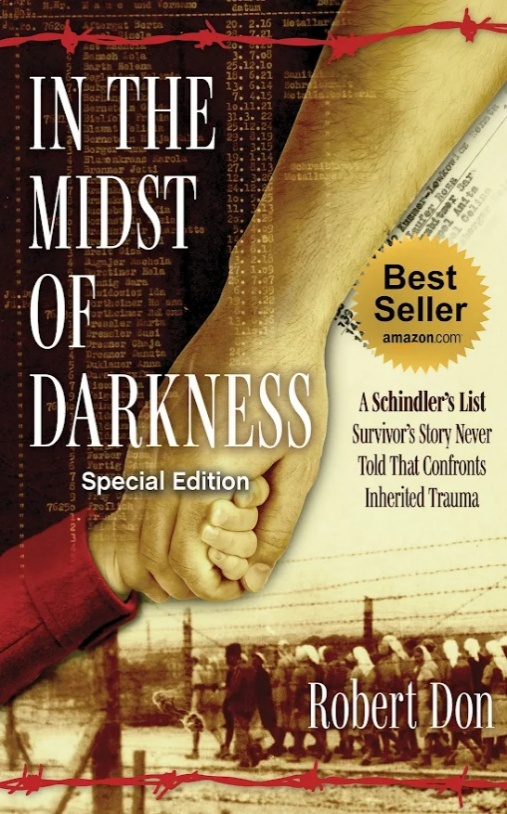
Understanding Jewish persecution during the Holocaust also means understanding what survivors carried with them after liberation. In In the Midst of Darkness, Robert Don tells the deeply personal story of his mother, Rosa, who lost her brother in the Holocaust, survived through Oskar Schindler.
Her experiences did not remain confined to history. The fear, grief, and hatred born from persecution profoundly influenced her children and their family relationships, revealing how the consequences of the Holocaust continued into the next generation.
Go beyond the historical record with In the Midst of Darkness, a personal account of survival, inherited trauma, and the enduring human consequences of persecution. Discover a story that shows why remembering the Holocaust also requires understanding what survivors and their families carried forward. Get your copy today!