


Survivor And Inherited Trauma – The Shoah and 10/7
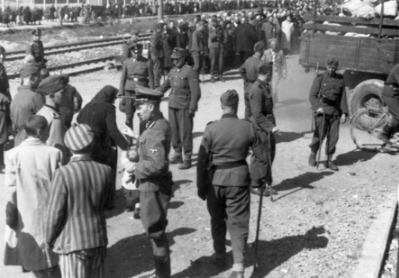
There has been so much shared of survivors’ accounts of the atrocities they lived through in the Holocaust, but not nearly enough of the trauma they’ve passed onto their children, their children’s children and what future generations may have to bear. If we only consider the approximately 11 million victims murdered in the Holocaust – of which there were six million Jewish lives, there must be at least that many survivors of family members and other relatives, who have probably been inflicted with survivor trauma. That also doesn’t consider there may be at least that many descendants of survivors, who may live with generational trauma.
If we talk about the penetration of the unconscionable atrocities dictated by antisemitism due to the Holocaust and the trauma that it often leaves survivors and their descendants, we also cannot forget the impact of October 7th. The trauma that survivors, witnesses and their descendants are left to confront of 1280 victims murdered by Hamas that day of unforgettable inhumanity or held in captivity.
Many who survived a time as catastrophic as the Holocaust and those in the aftermath of October 7th, including the survivors and families of the victims might not have been able to or may never fully adjust to real life again. Psychological research has found that survivor trauma and for the families of the victims during the Holocaust and October 7th will probably be inevitably passed on genetically to their descendants – let alone what future generations may need to confront.
I have felt Holocaust survivors could really begin to confront their trauma until nearly 50 years after the darkest era of history, when “Schindler’s List” was released in 1993 and Steven Spielberg founded the Shoah Foundation, a year later. The “Brutalist,” a film released in early January this year, a three-time Academy Award winner deeply explores the impact of a Holocaust survivor living with trauma and confronting assimilating to life in America, being ruined by his past.
The film also lets us see what something like the Holocaust or October 7th. can do to the victims, when being forced to integrate back into society, without the help needed to reconcile what they’ve confronted. Sometimes that only needs to be nothing more than sharing the trauma they live with to the depth needed. But in other circumstances, especially unrelenting psychological fear needs to be treated professionally.
The Shoah Foundation has given a voice to over 59,000 Holocaust survivors for them to share their trauma since it was established in 1994, five years after my mother passed away. After October 7th, the foundation also conducted interviews for survivor testimony and witnesses to share their account of the deadliest antisemitic attack since the Holocaust. But that penetration of public consciousness also can’t be more needed for the descendants of survivors and witnesses of October 7th, that wont escape inheriting their parent’s trauma. If not, the silence may only leave, or continue to leave them without enough awareness needed to really reconcile their trauma.
I have written a memoir titled “In the Midst of Darkness” – A Schindler’s List Survivor’s Story Never Told that tells what I know of my mother’s teenage life being a Schindler Jew that confronts “Second Generation” survivor trauma. She was traumatized due to being a holocaust survivor, and that my dad left her when she was eight months pregnant with me for a German woman. I never knew until five years after she passed away that she was a Schindler survivor.
My mother had been defined by her past after what she lived through in the Holocaust, and her parents, four sisters and a brother, who were murdered in the gas chambers of the Auschwitz and Belzec death camps. Her undeserved lifetime of hatred for my stepmother and every other German that my brother and I inherited helped lead to his nervous breakdown – a fate that was nearly mine. He was institutionalized before even reaching 30. The Shoah Foundation and its right of passage for survivors to tell what happened to them in the Holocaust would have meant everything to my mother. If she would have been able to share what she endured and lost, it may have helped to prevent some of her trauma that my brother and I inherited.
Jewish organizations, Holocaust museums and holocaust survivor groups have established support groups for descendants of survivors that live with Second and “Third” Generation (“2G & “3G”) trauma. But that’s often where it ends. The public socialization that’s needed for their stories hasn’t been anywhere even near what’s been seen for the stories of Holocaust survivors. I only hope that as we see a new chapter of trauma that’s being confronted after October 7th, we provide much more of what’s needed for those impacted and their descendants compared to what’s been accessible for Holocaust survivors. Despite that more of these resources have only been there for the past 30 years – coming after Schindler’s List and The Shoah Foundation was founded.
What’s really been that hard to understand and honestly heartbreaking is Holocaust museums, and many synagogues have not been very welcoming for a story of a Schindler Jew that confronts generational trauma. Prominent institutions for Holocaust remembrance, including The US Holocaust Museum, The Museum of Jewish Heritage, The LA Holocaust Museum, The St. Louis Holocaust Museum, The Simon Wiesenthal Center, The Illinois Holocaust Museum and even The Shoah Foundation haven’t been very responsive, or receptive.
I’ve been told from these institutions they have other stories that are priorities, the story doesn’t align with their thematic programming, or mission, they can’t tell every story in a public format, or there are layers of bureaucracy that exist. Maybe it’s the inherited trauma for descendants of survivors they don’t feel is worthwhile enough to be told to the reach we’ve given for survivor themselves. But I can’t be certain. What I do know is the descendants of survivors and future generations may need to confront due to the Holocaust and after October 7th need institutions of this nature to tell their stories. How do they heal from the trauma they’ve inherited being left without enough of a public voice to share what they’ve confronted? I’ve always known that “what you resist persists.” That can’t be more real than for a trauma victim, especially someone who can’t tell their story.
If we realize, there may be 10 – 15 million descendants of holocaust survivors and thousands that were impacted and their descendants by October 7th, who probably will be subject to trauma. What they have to confront may even reach an unconscionable level. Then how can we not give them every bit of compassion for the stories they need to tell?
